World War 1 German Uniforms: Design, Function, and Evolution
When people think of the First World War, images of muddy trenches, steel helmets, and massed infantry immediately come to mind. Among the most recognizable military attire of the era are World War 1 German uniforms, which evolved rapidly as the realities of industrial warfare reshaped how armies dressed, equipped, and protected their soldiers. German uniforms during World War I reflected a balance between tradition and innovation, blending 19th-century military heritage with the practical demands of modern combat.
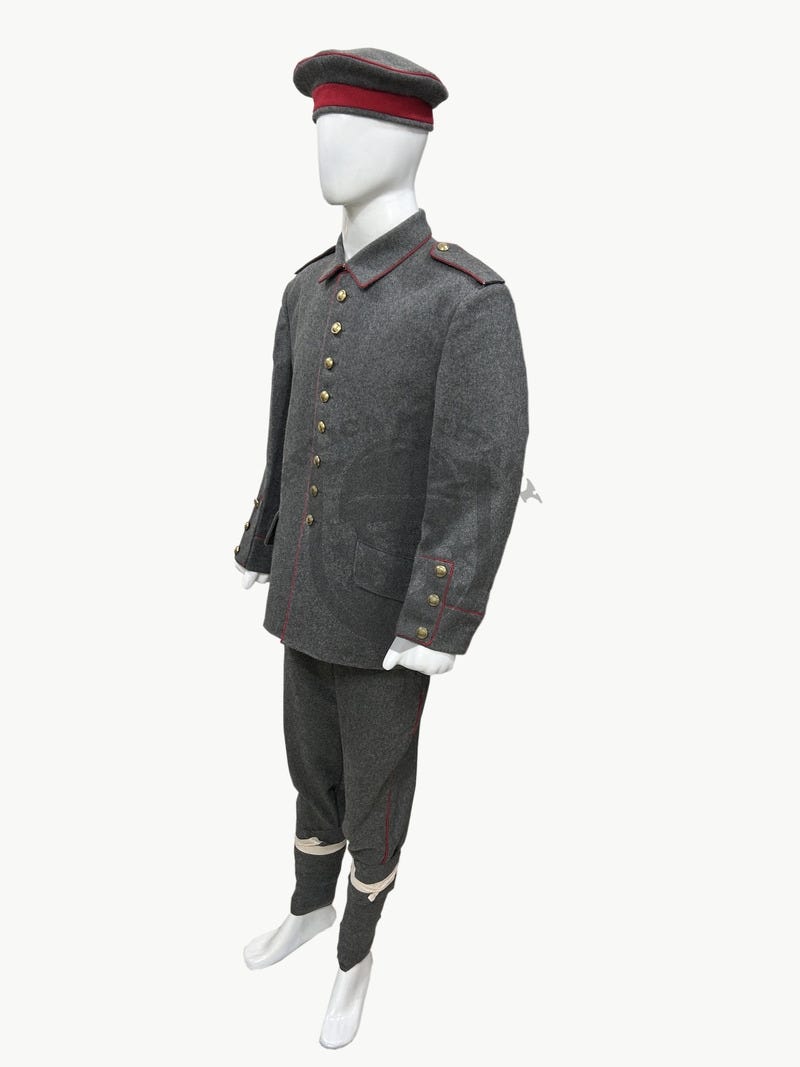
Pre-War German Military Style
At the outbreak of World War I in 1914, German soldiers entered the conflict wearing uniforms heavily influenced by earlier European military fashion. The standard field uniform was the Feldgrau (field gray) tunic, officially introduced in 1907. This gray-green color marked a significant shift away from the bright, decorative uniforms of the 19th century and was designed to provide better camouflage on the battlefield.
Despite this modernization, early World War 1 German uniforms still included elements that were soon proven impractical. Soldiers often wore leather Pickelhaube helmets topped with a metal spike, a symbol of Prussian military tradition. While intimidating in appearance, these helmets offered little real protection against shrapnel and gunfire.
The Feldgrau Uniform
The core of World War 1 German uniforms was the feldgrau wool tunic and trousers. The color varied slightly depending on manufacturing conditions, ranging from greenish-gray to brown-gray as the war progressed. Supply shortages later in the war led to noticeable inconsistencies in fabric quality and color.
The tunic typically featured:
- A high collar with colored piping indicating the soldier’s regiment
- Front buttons made of brass or steel
- Shoulder boards displaying rank and unit
- Four front pockets on later models for practicality
German soldiers wore matching feldgrau trousers, often reinforced at the knees. In colder conditions, greatcoats made of heavy wool were issued, providing warmth but becoming extremely heavy when wet.
Headgear: From Pickelhaube to Stahlhelm
One of the most dramatic changes in World War 1 German uniforms was the transition in headgear. Early in the war, the Pickelhaube was covered with a cloth Überzug (helmet cover) to reduce visibility and conceal unit insignia. However, as artillery fire became the primary cause of casualties, it became clear that better protection was needed.
In 1916, Germany introduced the Stahlhelm (steel helmet), which would become one of the most iconic military designs in history. Made from thick steel, the Stahlhelm offered improved protection against shrapnel and debris. Its distinctive shape, with flared sides and a sloping visor, influenced helmet designs well into the 20th century.
The Stahlhelm quickly replaced the Pickelhaube for frontline troops and became a defining feature of late-war World War 1 German uniforms.
Equipment and Load-Bearing Gear
German uniforms were complemented by an extensive system of leather equipment designed to carry ammunition, tools, and personal items. Soldiers typically wore:
- A leather belt with a prominent buckle bearing the imperial motto
- Ammunition pouches for rifle cartridges
- A bread bag for rations and personal items
- A canteen and mess tin
- An entrenching tool (shovel or spade)
The weight of this equipment could be substantial, especially during long marches or trench duty. As the war dragged on, soldiers often modified or discarded non-essential items to reduce their load.
Footwear and Legwear
Footwear was another important element of World War 1 German uniforms. Soldiers wore sturdy leather Marschstiefel (marching boots), which reached mid-calf and were designed for durability rather than comfort. These boots provided good ankle support but could become stiff and painful, especially in wet trench conditions.
Puttees and gaiters were also used, particularly by reserve and support units. Over time, shortages forced the German army to simplify footwear production, leading to variations in style and quality.
Rank and Insignia
German uniforms used a clear system of insignia to indicate rank and unit affiliation. Enlisted men wore simple shoulder straps, while non-commissioned officers had distinctive lace trim on their collars and cuffs. Officers’ uniforms were often of higher quality, made from finer cloth and privately tailored.
Despite the rigid hierarchy, the harsh conditions of trench warfare tended to blur visual distinctions, with mud and wear quickly obscuring insignia.
Late-War Simplification
By 1917 and 1918, World War 1 German uniforms became noticeably more utilitarian. Germany’s strained economy and material shortages forced the army to reduce decorative elements and simplify designs. Tunics lost colored piping, buttons were made from cheaper metals, and replacement garments were often poorly fitted.
Camouflage patterns began to appear late in the war, particularly on helmets and some specialized equipment. These experiments foreshadowed the more advanced camouflage systems used in later conflicts.
Legacy of World War 1 German Uniforms
The influence of World War 1 German uniforms extended far beyond the end of the conflict. The feldgrau color, Stahlhelm design, and functional approach to military clothing shaped German uniforms in World War II and influenced armies around the world.
More broadly, these uniforms symbolize the transformation of warfare itself — from colorful, ceremonial armies to industrialized forces focused on survival, efficiency, and mass production. Today, World War 1 German uniforms remain a subject of interest for historians, collectors, reenactors, and anyone fascinated by the visual and material culture of the Great War.
Conclusion
World War 1 German uniforms tell a story of adaptation under extreme pressure. From the traditional Pickelhaube to the revolutionary Stahlhelm, and from decorative pre-war tunics to stripped-down late-war attire, these uniforms reflect the brutal lessons learned on the battlefields of Europe. Studying them offers valuable insight into how soldiers lived, fought, and endured one of history’s most devastating conflicts.
.png)


Comments
Post a Comment